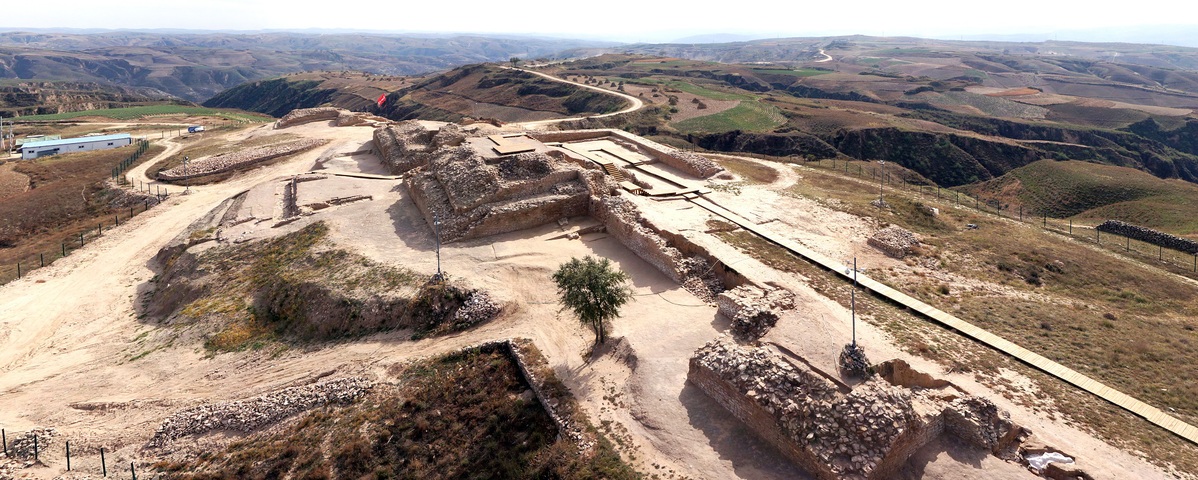
Shimao Site
Introduction
The Shimao Site is a significant archaeological discovery located in Shenmu county, Yulin city, Shaanxi province. This prehistoric site, dating back approximately 4,000 years, represents an early-stage country with a complex social structure and advanced civilization. The site is situated on the northern part of the Loess Plateau in Shaanxi, along the southern edge of the Maowusu Desert. It spans over 4 million square meters, making it the largest prehistoric city site discovered in China. The Shimao Site is an integral part of the project to trace the origins of Chinese civilization, shedding light on the early development of society along the Yellow River.
History
The Shimao Site was first discovered in the 1950s, but its true significance was not realized until recent decades. The archaeological discoveries revealed that the site dates back to approximately 4,000 years ago. The site's history is marked by its construction and eventual abandonment, which chronological studies suggest occurred between 2300 BC and 1800 BC. The Shimao Site's history is characterized by its role as a regional power center, with evidence of a highly structured society and early state formation.
Archaeology
Excavation Discoveries
Excavations at the Shimao Site have uncovered a wealth of artifacts and structures, providing valuable insights into the lives of its ancient inhabitants. The site features an imperial city platform, inner and outer city areas, and a noble-exclusive cemetery. The discovery of large stone carvings and a corner relief at the imperial city platform has been crucial in determining the site's age and architectural nature. Additionally, the excavation has revealed stone mound tombs, which are larger and more advanced than previously discovered tombs, indicating the site's importance as a high-level noble cemetery.
Artifacts
The Shimao Site has yielded a significant collection of artifacts, including jade, pottery and stone carvings. These artifacts provide a glimpse into the daily lives and cultural practices of the Shimao society. The presence of ceremonial jade artifacts suggests a complex belief system and social hierarchy. The discovery of a wealth of relics, including jade, bronze, and pottery items, reflects the site's economic and cultural significance. The artifacts from Shimao demonstrate the exchange of cultural and technological influences with other regions, highlighting the site's role in early Chinese civilization.
Building Structures
The architectural remains at the Shimao Site are characterized by their massive stone structures and defensive systems. The site features an extensive network of city walls, gates, bastions and underground tunnels. The construction of these structures required significant labor and resources, indicating a highly organized society. The imperial city platform and surrounding stone walls showcase the site's advanced architectural capabilities. The presence of barbicans and bastions, which were previously believed to have first appeared in later Chinese dynasties, suggests that Shimao was ahead of its time in terms of urban planning and defense.
Culture
Social Structure
The social structure of the Shimao society was complex and hierarchical, as evidenced by the spatial organization of the site and the distribution of burial sites. The presence of a noble-exclusive cemetery and large stone mound tombs indicates a stratified society with distinct social classes. The artifacts and architectural features of the site suggest a centralized authority and a well-defined social hierarchy. The Shimao society likely had a system of governance that facilitated the coordination and mobilization of resources for large-scale construction projects.
Religious Practices
Religious practices at the Shimao Site are reflected in the artifacts and architectural features discovered during excavations. The presence of ceremonial jade artifacts and stone reliefs with symbolic motifs indicates a belief system centered around deities and ancestral worship. The site's layout, with its prominent imperial city platform and associated structures, suggests that religious and political authority were closely intertwined. The discovery of oracles, ceramic eagles and other religious artifacts further highlights the importance of spiritual practices in the Shimao society.
Significance
The Shimao Site is significant for its contributions to the understanding of early Chinese civilization. It provides crucial evidence of early state formation and social stratification in ancient China. The site's size and complexity demonstrate the advanced capabilities of its inhabitants in terms of urban planning, architecture and cultural development. As part of the broader project to trace the origins of Chinese civilization, the Shimao Site offers valuable insights into the evolution of society along the Yellow River and its influence on subsequent cultural developments in the region.
Preservation and Protection
Efforts to preserve and protect the Shimao Site are ongoing, as it represents a vital link to China's ancient past. The site is recognized as a significant cultural heritage site, and measures are being taken to ensure its conservation for future generations. Archaeologists and researchers continue to study the site, seeking to uncover more information about its history and significance. Public awareness and education initiatives are also being implemented to promote the importance of preserving this invaluable archaeological treasure.








